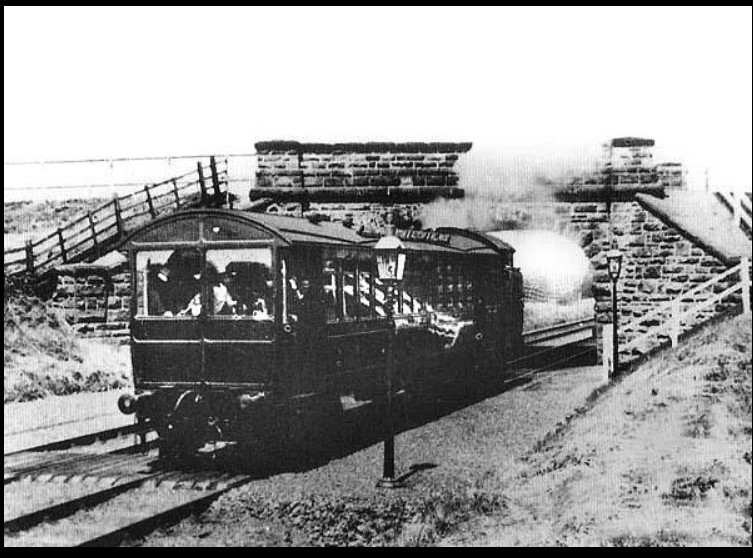
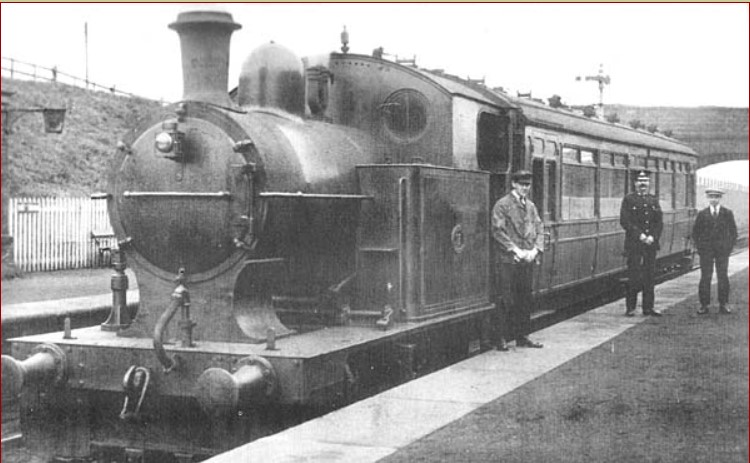
Altcar Bob was the familiar name for a train service introduced by the Lancashire & Yorkshire railway from Altcar & Hillhouse to Southport, via Halsall, also known as the Barton Branch. The line was not a financial success but the service and its railmotor coach and locomotive are still remembered fondly even though the passenger service ceased in 1938.
History
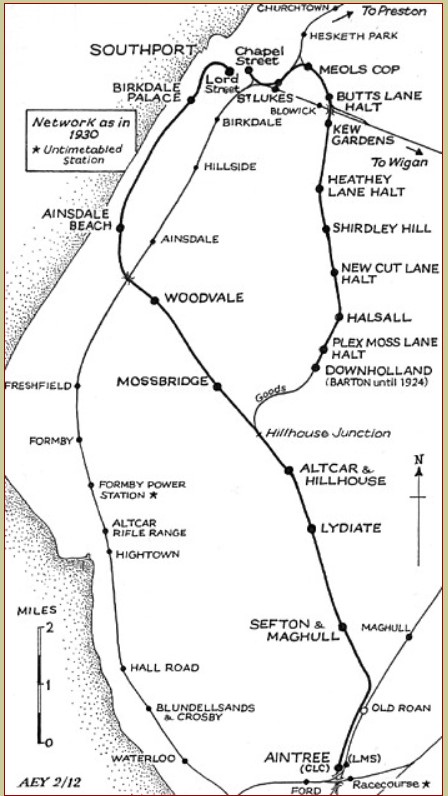
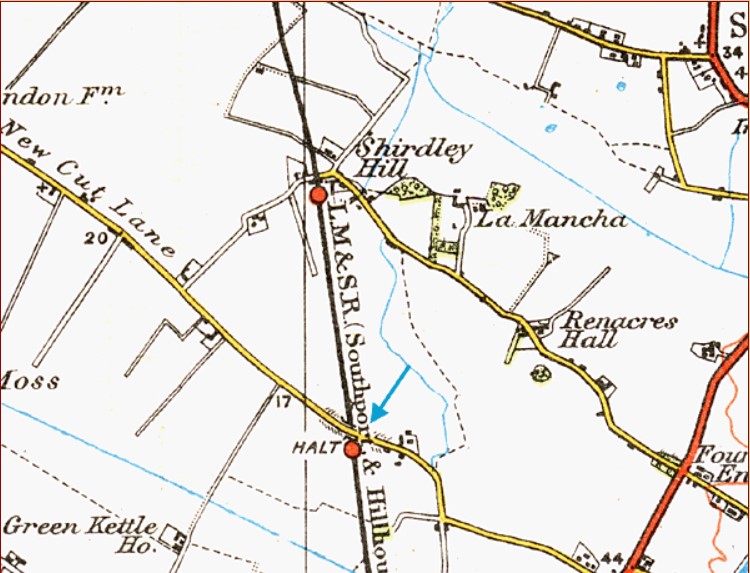
Route of Barton Branch
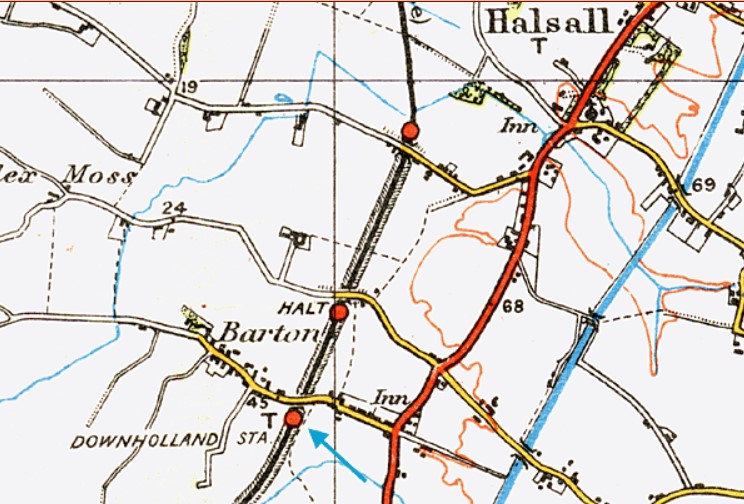
The line was originally opened by Liverpool, Southport & Preston Junction Railway (LSPJR) in 1887. The route was from Hellhouse Junction on the Cheshire Lines Committe route (CLC), then through the West Lancashire villages of Downholland and Halsall to Southport via Meols Cop.
In 1897 the L&Y acquired the LSPJR and in 1906 with the addition of some extra Halts the L&Y introduced the famous railmotor service.
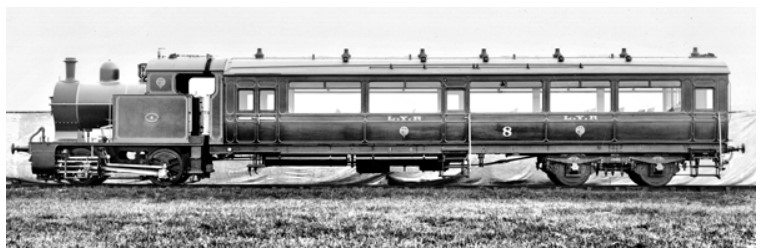
The origin of the name “Altcar Bob” is uncertain. The service started at Altcar & Hillhouse station. You had to change there to get to Maghull and Liverpool. It is suggested that “Bob” might have been one of the frequent train drivers, or that engine men referred to these small locomotives as “Bob”. Or was the first fare one shilling? Whatever the explanation, it is a well-known local name, even Wikipedia has an entry for it.
It was originally a frequent service for such a minor branch line. In 1910 there were 16 return trips and a Sunday service. In 1922 the L&Y became the London & North Western Railway (LNWR) who reduced it to 10 daily trips. In 1924 it became part of the London Midland Scottish (LMS) railway company, and they stopped services to Altcar in 1926. The new end of the line at Barton station was renamed Downholland. The whole line closed to passenger services in 1938, although some freight traffic continued until 1952. After that the line was closed at Shirdley Hill and the section from Meols Cop to Shirdley Hill was used to store excursion trains. The track was lifted in the 1960s.
Stations
Southport Central and Ash Street
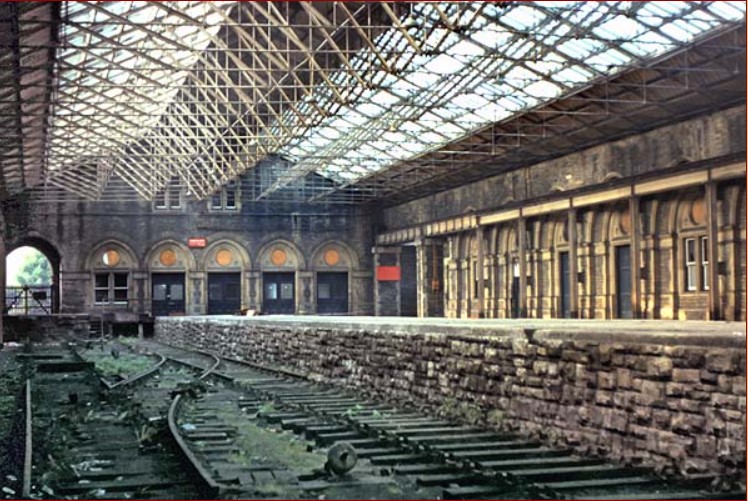
Souhport Central prior to demolition in 1975 (credit Ian McLoghlin, Flickr)
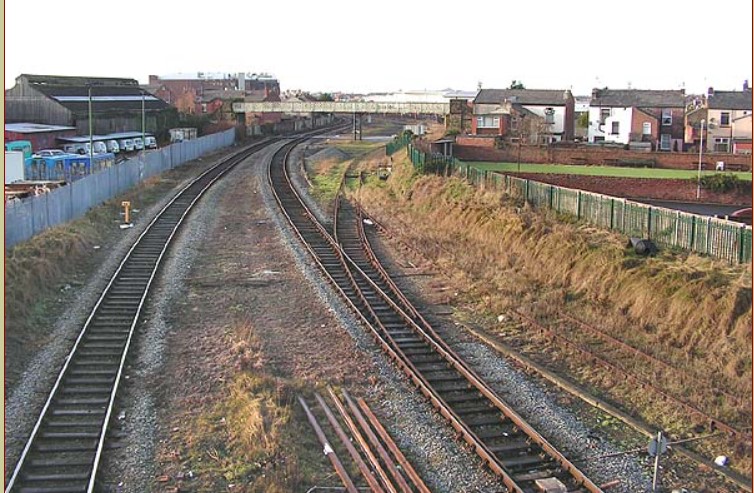
Rusty track on right is approx location of Ash Street station with tracks going onto Chapel Street
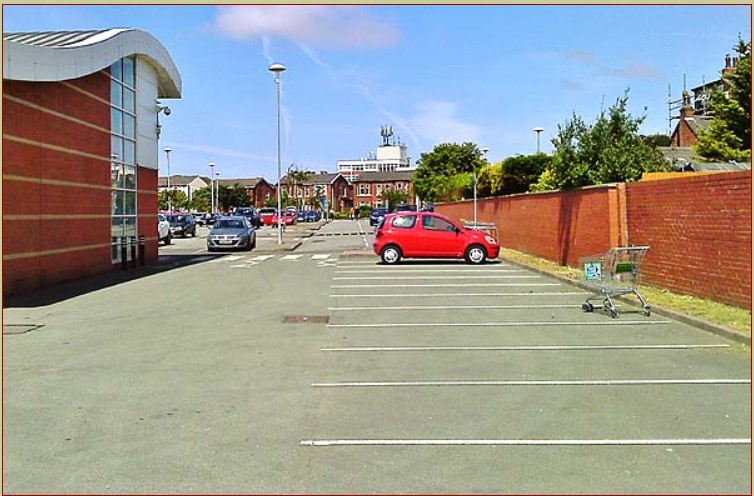
Southport engine shed and Central station is now Central 12 retail park and building on the left is now a McDonalds restuarant
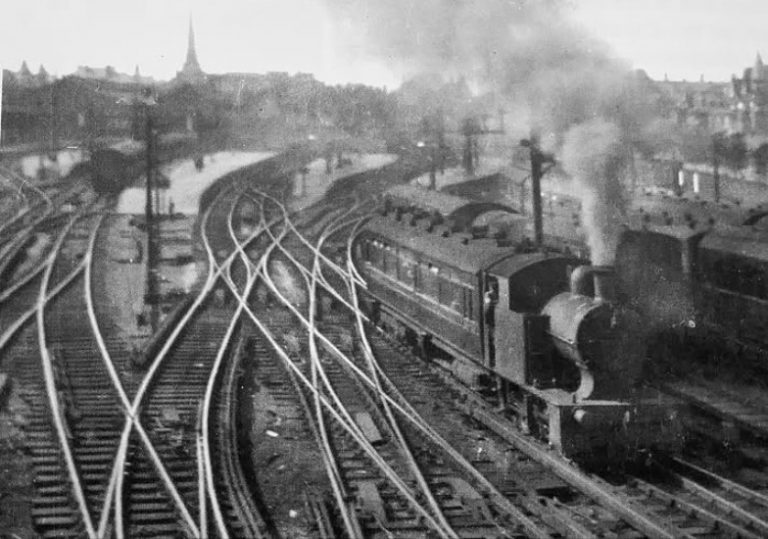
Altcar Bob 10601 leaving Southport Chapel Street in 1928 (credit Noel Coates)
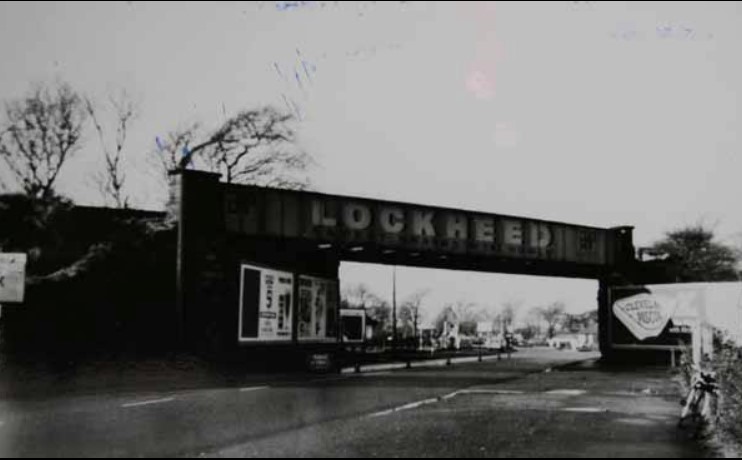
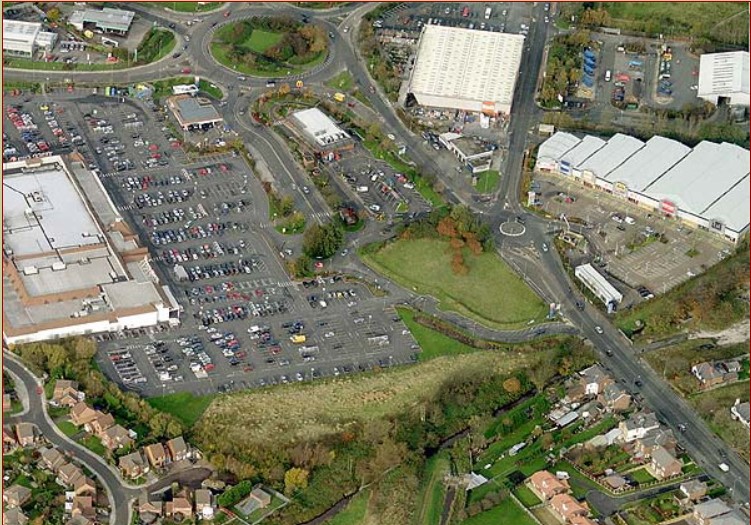
Old bridge over Southport Road, now replaced by Tesco at Kew retail park .
Originally the LSPJ railway had a terminus at Southport Central station and another station at Ash Street. When the LSPJ was absorbed into the L&Y in 1897 the L&Y already had Southport Chapel Street (current Southport station) so Ash Street was demolished to make a route to Chapel Street in 1901. Southport Central survived as a goods depot until 1975.
Meols Cop
Altcar Bob train at Meols Cop en route to Southport. ( Credit Sations UK)
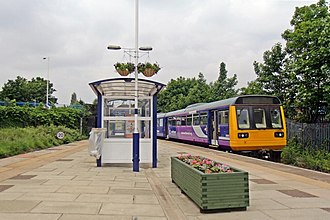
More Recent photo of Meols Cop (Wikipedia)
Meols Cop station is still open, part of the Southport to Wigan service.
Butts Lane Halt
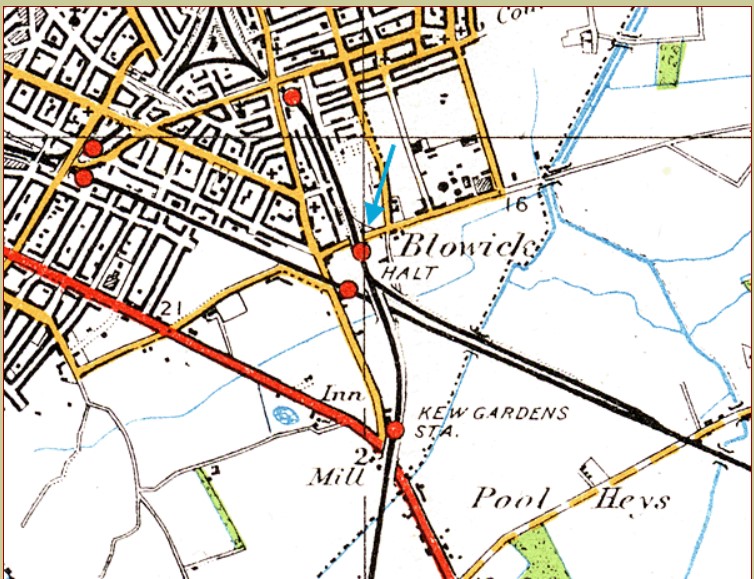
Site of the Butts Lane Halt (under "Blowicks" )
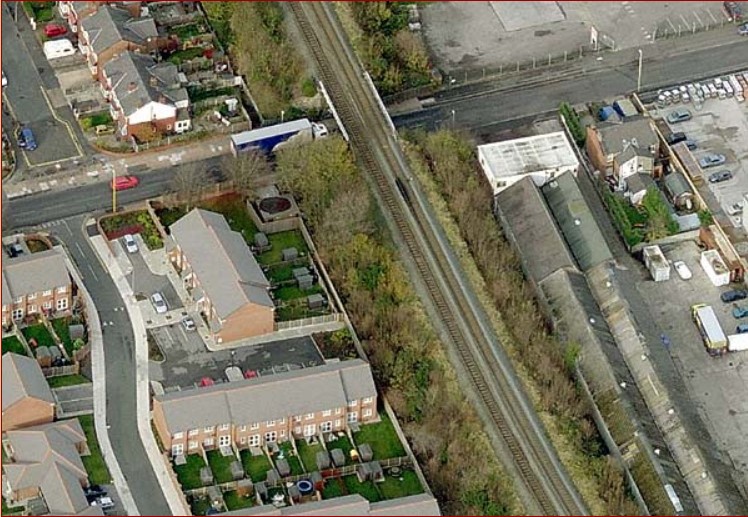
Site of Butts Lane Halt
The Butts Lane Halt was opened in 1907 soon after the introduction of the new railmotor service. There were two track level platforms either side of the double track, high on the embankment , just after the Butts Lane bridge. This was close to a residential area of Southport. Although this was “new” track on the Barton branch , this has now been realigned and is now part of the Southport to Wigan line.
Kew Gardens
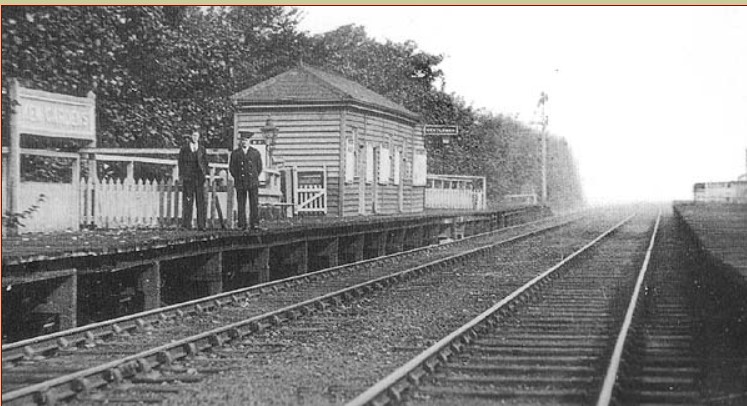
Kew Gardens in LMS days c. 1930s (Credit Stations UK)
Kew retail park. Tesco on left, Kew Gardens would have been on right were the Car Wash is located.
Kew Gardens station was built to serve a pleasure gardens. The line was on a embankment running top to bottom on the picture with a bridge over the A570 Southport road. The location has changed dramatically over the years with Tesco and other retail parks. There were sidings at ground level further south which served Kew Corn Mill.
Heathey Lane Halt
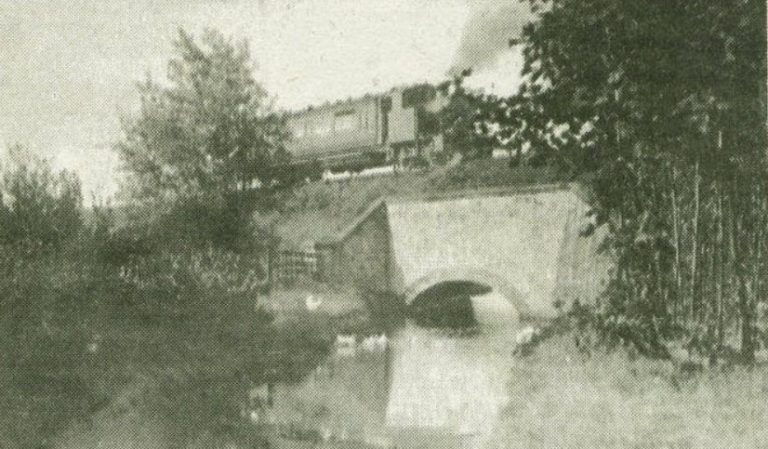
Altcar Bob between Heathey Lane and Kew Gardens c. 1910
Site of Heathey Lane Halt from the bridge.
Heathey Lane Halt was opened in 1907, same time as Butts Lane Halt following the successful opening of New Cut Lane and Plex Lane halts.
The Halt was a simple cinder area adjacent to the track with wooden staircase down from the bridge.
Shirdley Hill
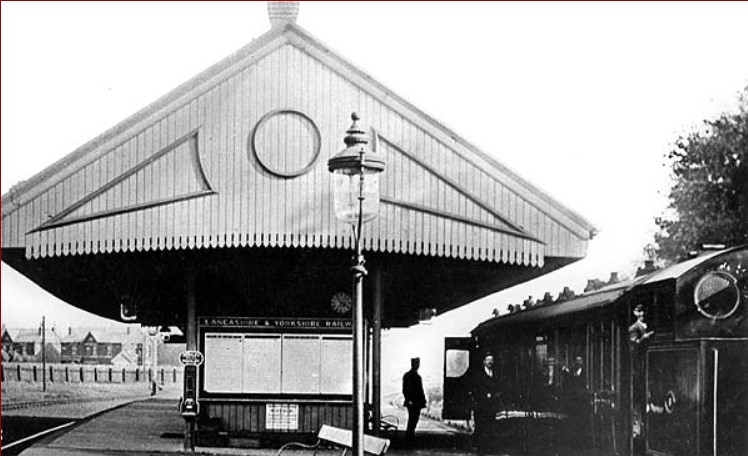
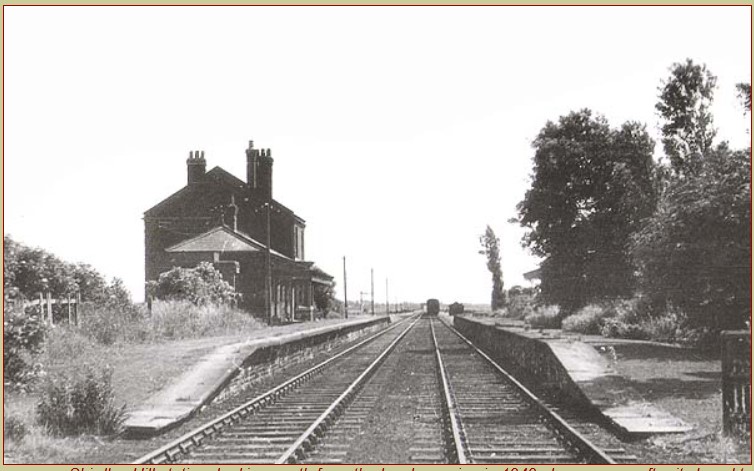
Shirdley Hill looking south in 1949. Although closed to passengers there were occasional freight workings. (Stations UK)
Shirdley Hill station in 1928
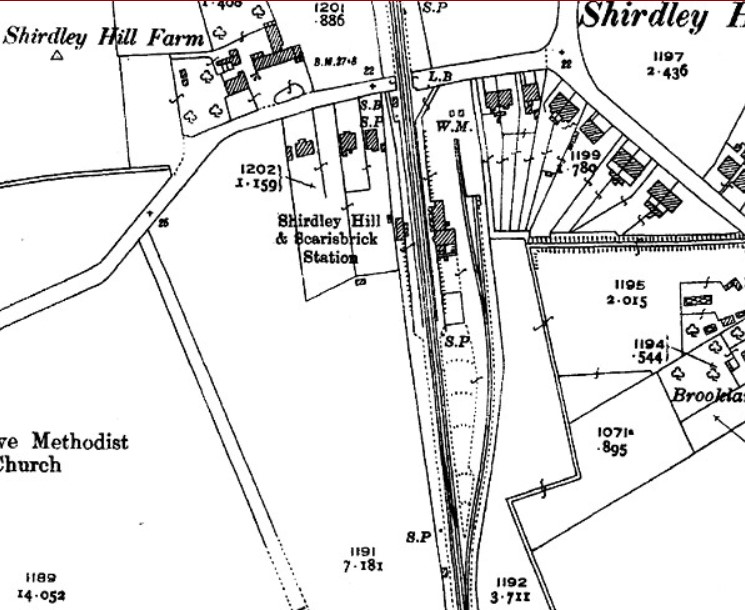
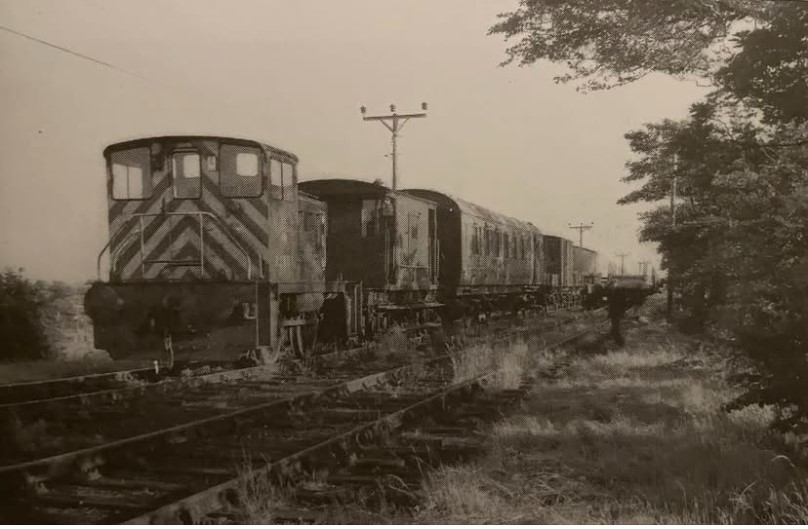
Shirdley Hill was one of the main stations on the line with a station master’s house and a signal box to control the only level crossing on the line which remained until 1960. The goods service was withdrawn in 1953 and the track between Shirdley Hill and Butts Lane became storage sidings. The track south of Shirdley Hill through Halsall to Downholland was not removed until 1963.
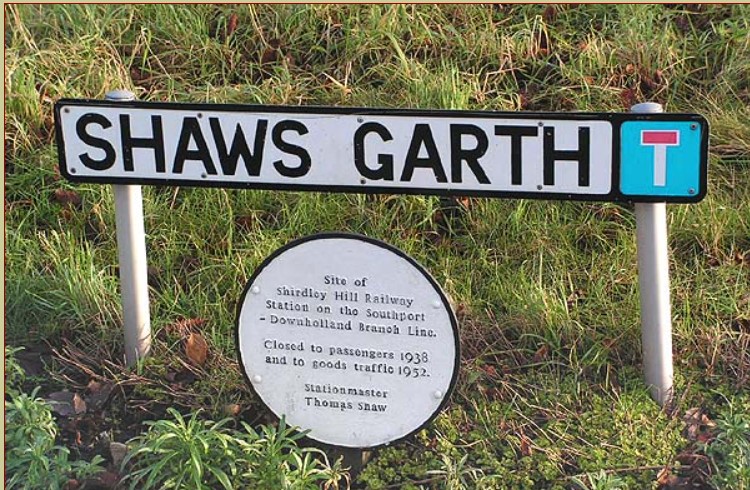
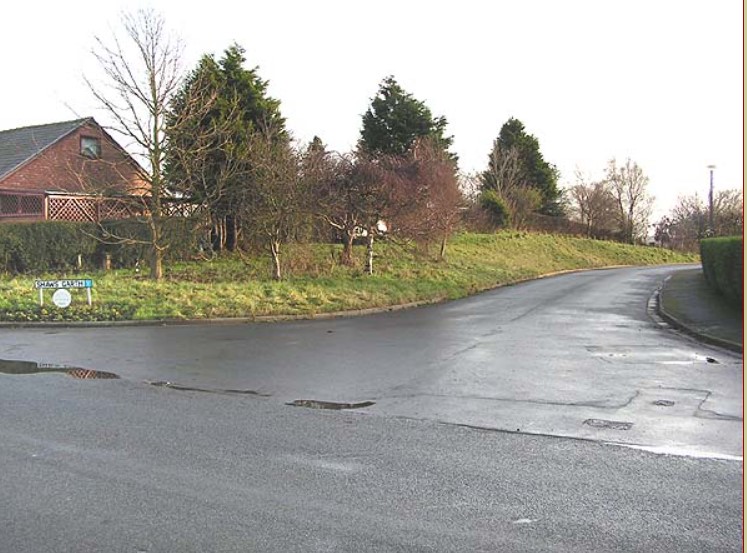
Shaws Garth is the road name for several bungalows built on the site of Shirdley Hill station. Thomas Shaw was the last station master.
Shaws Garth, site of Shirdley Hill station
Lifting old track near Shirdley Hill in 1960s (Credit BG Barlow)
New Cut Lane Halt
Shirdley Hill to New Cut Lane
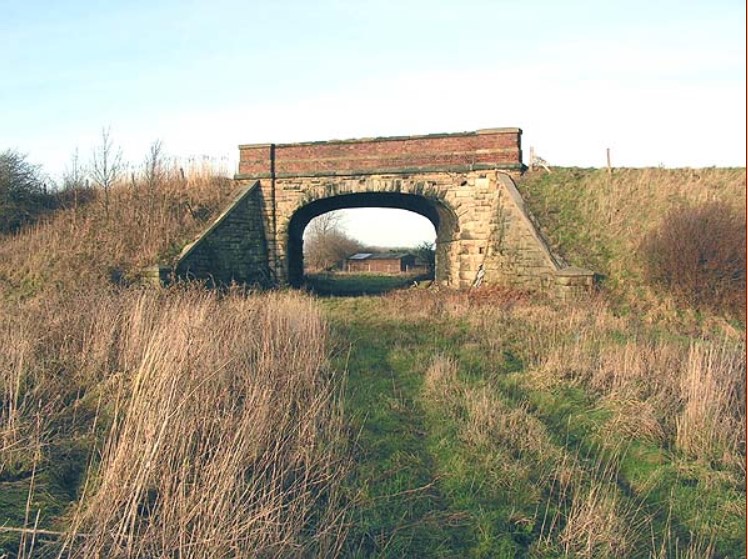
New Cut Lane bridge
New Cut Lane halt was one of the new halts constructed in 1906/7 to promote the new railmotor service. Just a basic cinder ash area at track level. Probably with an oil lamp as per the Plex Lane photograph.
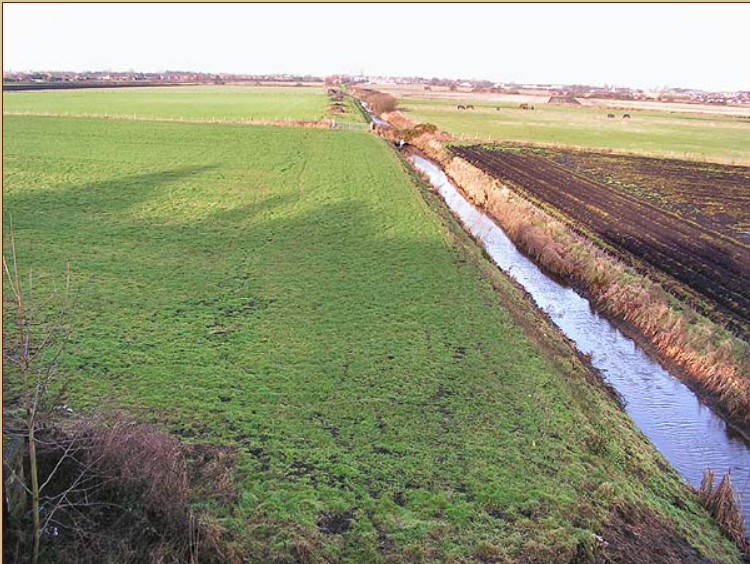
Although this photo shows a farm track it is not possible to walk the length of the line. Houses have been built on the trackbed and the land has been added to adjoining fields as private property.
Halsall
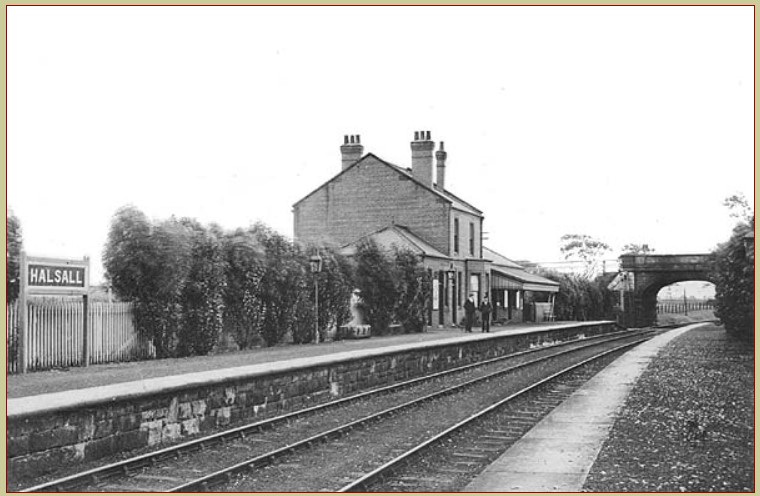
Halsall station
Development on site of Halsall station, white house is part of original stationmaster's house.
Halsall station was off Carr Moss Lane. The original stationmaster’s house is now a modified private residence and other houses have been built on the trackbed.
Halsall retained a goods service between 1938 and 1952. It had 3 sidings
Plex Moss Lane Halt
Halsall, Plex Lane and Barton/Downholland stations.
Plex Moss Lane Halt with the passenger carriage leading. (Credit Paul Wright)
Plex Moss Lane was typical of the additional halts installed by the L&Y in 1906/7. A low level cinder/gravel area, an oil lamp and access down from the overbridge like New Cut and Heathey Lane halts.
Plex Moss Lane photo shows driving from the carriage end. The engine driver moved into the carriage and communicated with the fireman in the engine via bell signals.
Barton / Downhollland
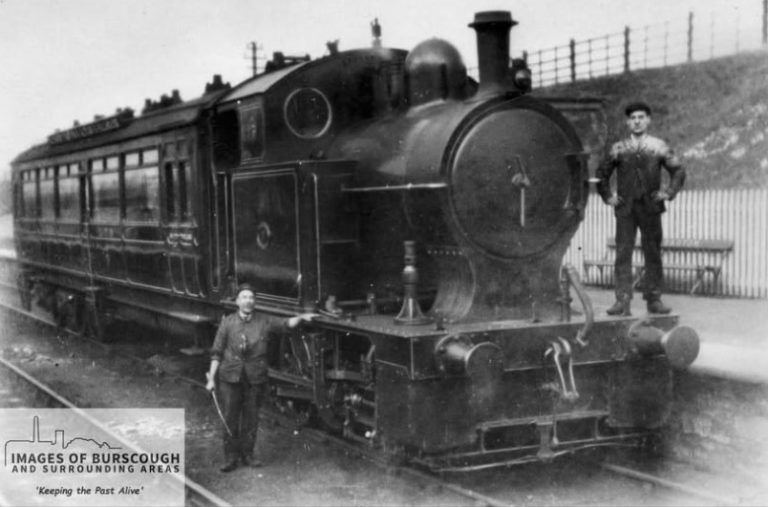
Earlier version of Railmotor at Downholland. Note thin chimney
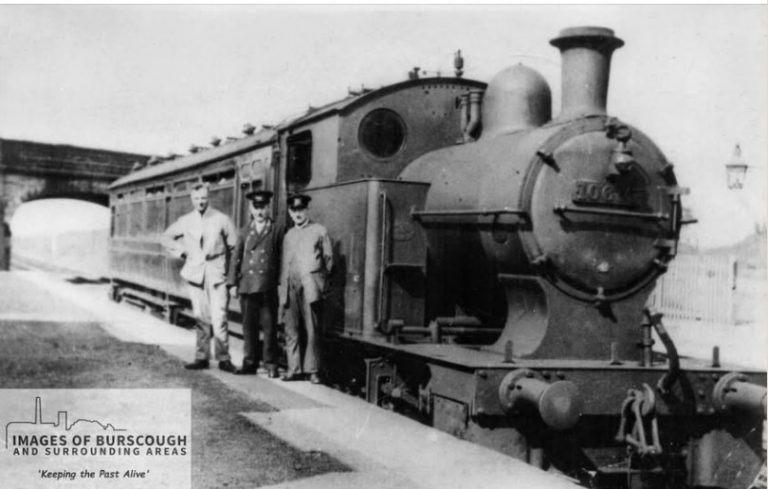
Later version (thicker chimney) of railmotor, again at Downholland
Altcar Bob was not a single engine. The Lancashire and Yorkshire railway built 18 railmotor sets between 1906 and 1911. One variation between engines was the size of the chimney and style of smokebox door and there are photos of different engines at Downhollland.
Barton was the temporary terminus between 1917 and 1919 as part of war time economy measures but in 1926 the LMS closed the line permanently after Barton and renamed the station Downholland.
Altcar Bob arriving at Barton in c. 1910 (Credit Stations UK)
Downholland in 1954 after goods service had ceased.
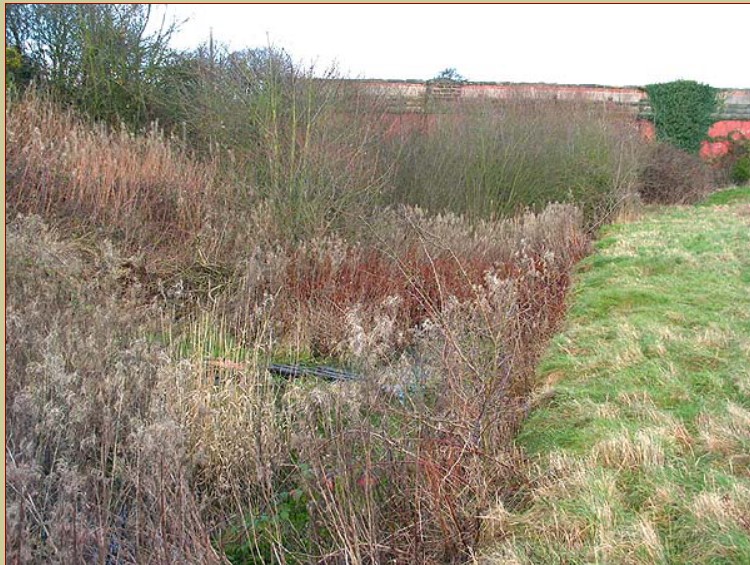
Downholland in 2005. The platforms are heavily obscured by vegetation . (Credit Paul Wright)
Altcar & Hillhouse
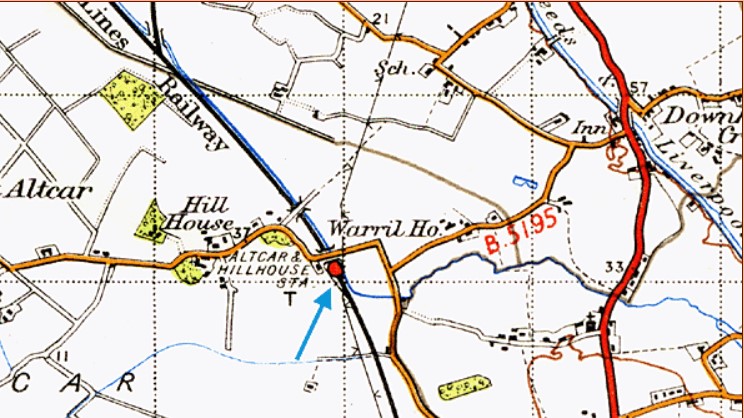
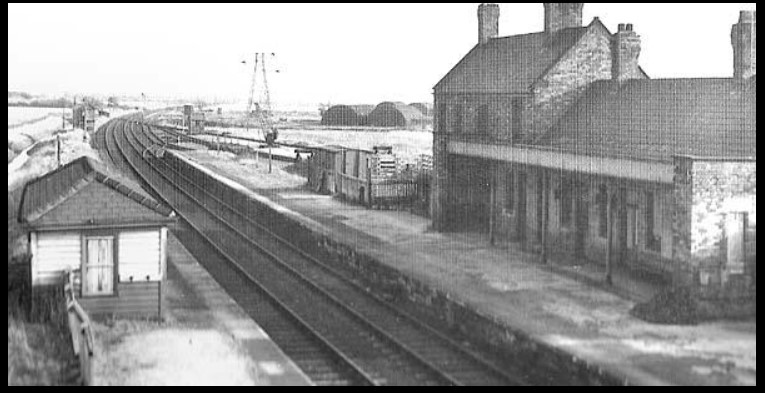
Altcar & Hillhouse. The juction with Barton branch is at the top left.
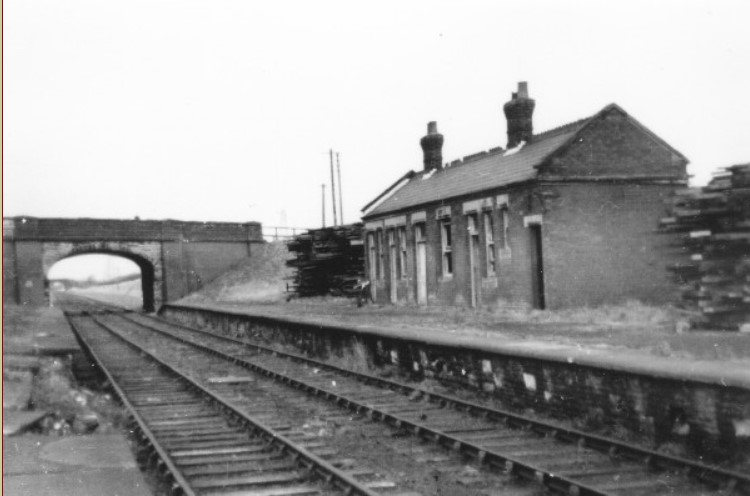
Altcar and Hillhouse in 1954
Altcar & Hillhouse was opened in 1884 as part of the Southport and Cheshire Lines route from Aintree to Southport Lord Street. The Barton branch was opened in 1887.
Altcar was is a sparsely populated area and the station was closed during World War 1 as a economy measure. In 1926 the LMS stopped the Altcar Bob service at Barton/Downholland although Altcar was still open on the Aintree to Southport route.
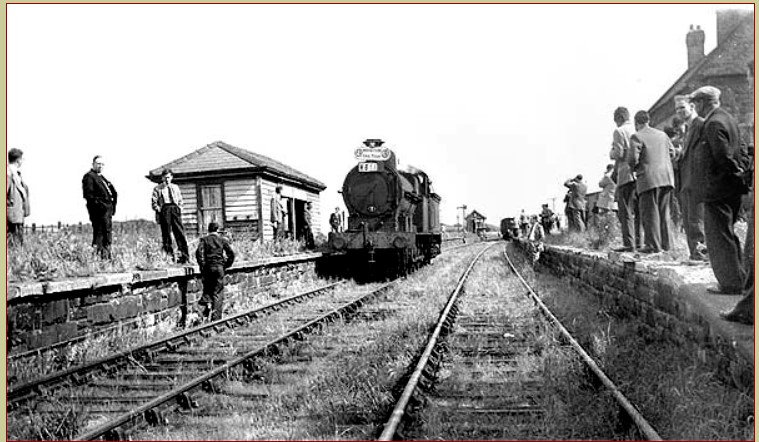
Rail enthusiasts railtour to Altcar in 1959
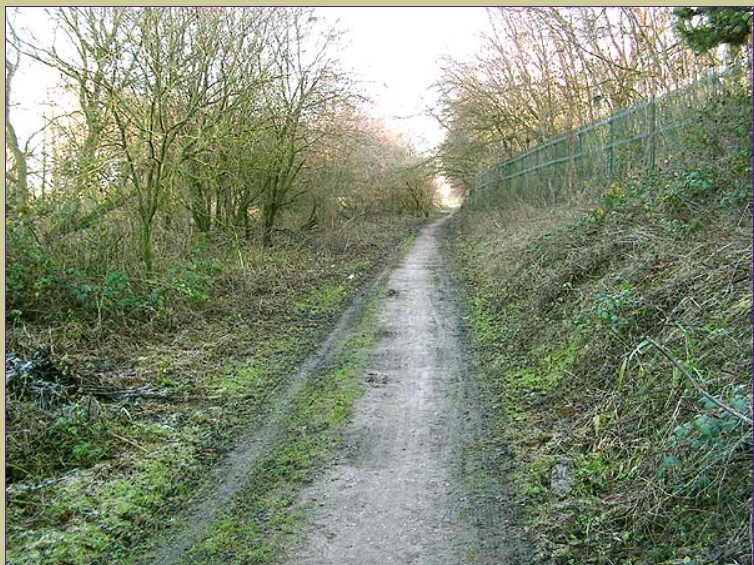
Cheshire LInes Footpath at Altcar
British Rail closed Altcar in 1952 but there was a special rail tour in 1959 accessed from Aintree to Southport line before the track was lifted in 1960.
The route from Southport to Maghull , through Altcar, is now the Cheshire Lines Path for walking, cycling and horse riding. It also forms part of the longer Trans Pennine long distance path from Southport to Hornsea.
More information about Altcar Bob is available on Wikipedia. More information on all the railway stations ( timetables, tickets, photos, maps and history) is available at Disused Stations (Halsall) . John Ashcroft from Halsall wrote a story (1972) about Altcar Bob which is now archived by local newspaper QLocal. There is another newspaper article about residents’ recollections of Altcar Bob here.
People
Lorem ipsum dolor sit amet, consectetur adipiscing elit. Ut elit tellus, luctus nec ullamcorper mattis, pulvinar dapibus leo.